

Academics

Northwestern provides a quality and affordable education to all students.

Our academic goals are driven through our Mission Statement, which embraces ethical leadership and service, critical thinking and fiscal responsibility.  

Our faculty focus on teaching, not research, allowing them time to provide personal attention to you, providing detailed academic advising and other forms of academic assistance. You will get to know your teachers, and they will get to know you. 

Choose from undergraduate and graduate programs across two academic schools.

Degree Options

Academic Structure and Programs

Graduate Studies

Honors Program

Academic Leadership

Headshot of Dr. Steve Maier

Vice President for Academics

At Northwestern, we take great pride in the quality of education provided to students with a variety of interests and aspirations. At the heart of that education is a highly committed and qualified faculty who provide instruction on our main campus in Alva as well as at our Enid and Woodward locations, at the University Center in Ponca City, by ITV to students at additional and concurrent sites, and through online courses to students in a variety of locations.  Sixty-one percent of full-time faculty members hold the doctoral degree, and 64 percent hold a terminal degree. This level of expertise, coupled with a student-faculty ratio of 15 to 1, allows the faculty to provide students with the support and experiences that they need to be successful. 

We hope that you will be one of those Ranger success stories now or in the future! 
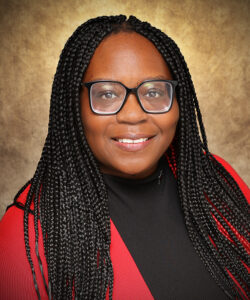
Dr. Steve Maier
Herod Hall, second floor
(580) 327-8406
sjmaier@nwosu.edu

Dr. Roxie James

Dean of Faculty

At Northwestern Oklahoma State University, opportunity is a tradition we keep expanding. Our academic departments and divisions serve students at every stage of the journey: concurrent high school students, graduating seniors, first-generation college students, transfer students, and adult learners returning to the classroom. We meet each of them with dedicated faculty, robust student support programs, extensive scholarship offerings, and a growing number of program collaborations that continue to open new degree pathways.

Higher education is always changing, and Northwestern has never shied away from that. Growing stronger with every generation of Rangers, we welcome what comes next. Teaching remains the heart of our mission, but we also invest in our faculty as scholars and professionals, because when our faculty grow, our programs grow, and our students benefit most of all.

Wherever your goals lead, we would be glad to help you get there. Ride, Rangers, Ride!

Dr. Roxie James
Ryerson Hall 211
Northwestern – Alva
(580) 327-8590
rjjames@nwosu.edu

Faculty & Academic Support

Employee Directory

Executive Leadership

Faculty Evaluation & Development

Spotlight Newsletter

The General Education program at Northwestern provides a foundation for all degree programs and offers opportunities for students to develop competencies in critical thinking, leadership and literacy. You will want to concentrate on taking these requirements early in your college career.

General Education classes are required of all students for graduation. Some degree programs require specific general education courses. Students should consult the department sections in the Undergraduate Catalog for specific courses in General Education required for majors.

View the Undergraduate Catalog Here

Academic System

Northwestern’s academic year consists of two semesters, fall and spring, and a summer session. The fall and spring semesters are each 16 weeks in length. The fall semester begins in mid-August and ends in early-December. The spring semester begins in mid-January and ends in early-May. The summer session begins the first week of June and ends the last week of July. Interim courses also are offered in December, January and May.

Students pursuing undergraduate degree programs are classified by the number of semester hours of credit earned. Hours that are excluded include developmental courses taught below college level and courses in which “F” grades are received. Listed below are the criteria used in the classification process:

  • Freshman: fewer than 31 hours
  • Sophomore: 31-60 hours
  • Junior: 61-90 hours
  • Senior: 91 + hours

Quick Facts

Bachelor’s degrees are available in more than 40 areas of study.

Most popular degree programs:

  • Health and Sports Science Education
  • Business Administration
  • Psychology
  • Nursing
  • Agriculture
  • Biology
  • Education
  • Computer Science
  • Accounting
  • Criminal Justice
  • Social Work
  • The student-faculty ratio is 15 to 1. 
  • Total Campus Enrollment (Fall 2025): 2,152
  • Since 2021, the university’s enrollment has increased more than 20 percent.
  • Nearly 60% of Northwestern undergraduate students graduate debt-free.
  • 49% of Fall 2023 Enrollment was made up of First-Generation Students
  • 60% of the people enrolled in 2023 were female
  • More than 98% of freshmen who apply receive some aid, and 90% of our total student population receives some form of aid.
  • More than two-thirds of college students change their majors at least once during their college careers.

Undecided? While completing your general education requirements, add a few electives. You might discover a path to your future.  

Additional facts about Northwestern may be found in the NWOSU Factbook.

The University is accredited by the Higher Learning Commission. Other programs such as education, business, nursing and social work have specialized accreditations from national organizations. These include the Council for the Accreditation of Educator Preparation (CAEP), the Accreditation Commission for Education in Nursing (ACEN), the Council on Social Work Education (CSWE), and the Accreditation Council for Business Schools and Programs (ACBSP). The Charles Morton Share Trust Division of Nursing’s programs are approved by the Oklahoma Board of Nursing.

15 to Finish

Northwestern promotes the Complete College America initiative of 15 to Finish, encouraging students to enroll in at least 15 credit hours each semester (30 credits per academic year) so students stay on track to graduate on time.

Northwestern Oklahoma State University offers programs that lead to licensure or certification in nursingeducationsocial work, and counseling.  For students considering programs with a goal of certification or licensure in states other than Oklahoma, please contact your state’s appropriate licensing agency to obtain requirements.  Further disclosure information can be located on our program’s individual webpage.

Additional Resources

Undergraduate Catalog

Course Rotations

Plans of Study

Bridge Program

Campus Bookstore

Online Programs

Northwestern Oklahoma State University provides quality educational and cultural opportunities to learners with diverse needs by cultivating ethical leadership and service, critical thinking and fiscal responsibility.